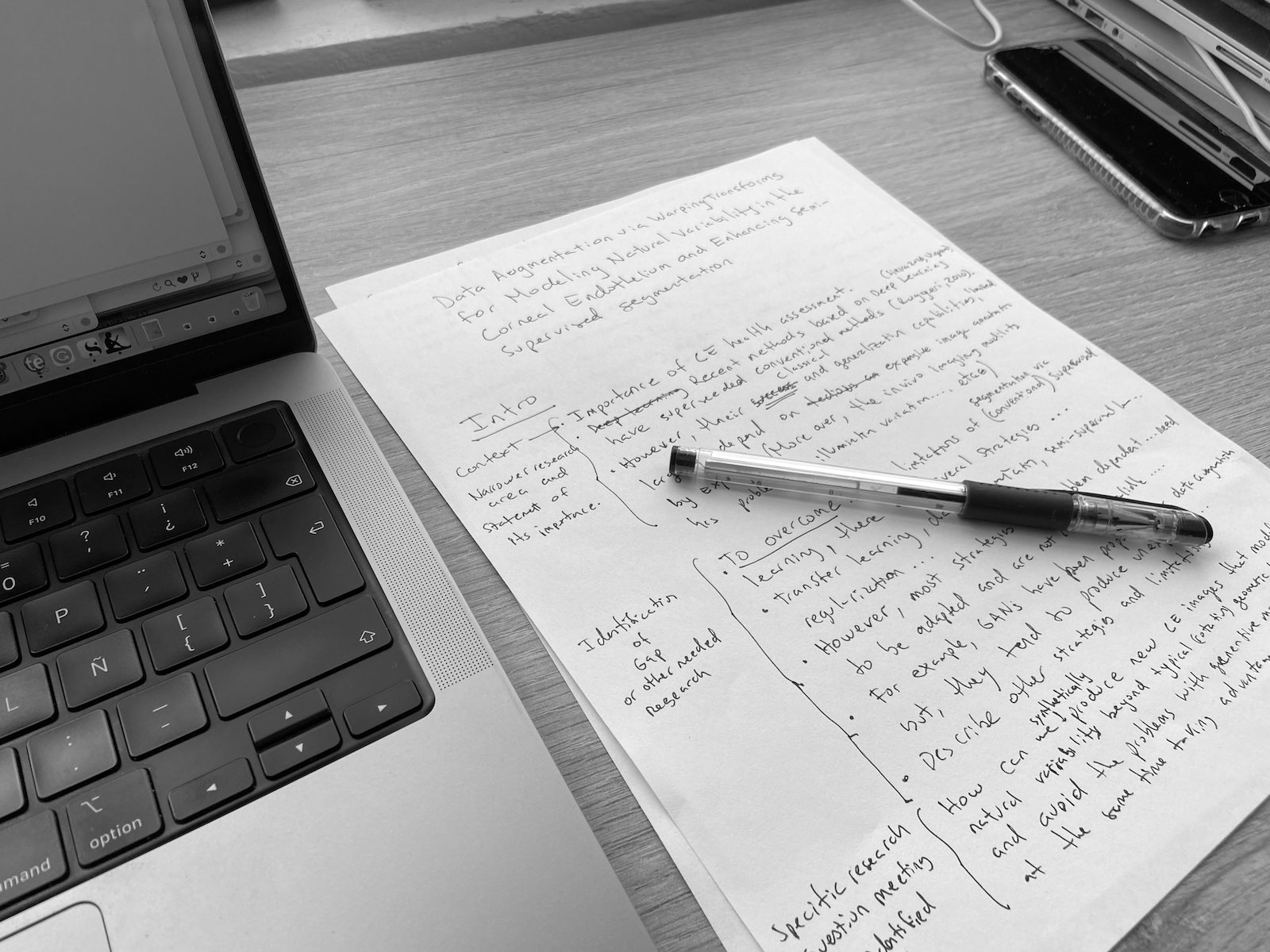
I teach a course on scientific writing for graduate students—an endeavor that, at first glance, might seem quaint in an age where artificial intelligence drafts emails, summarizes research, and even suggests titles more clever than our own.
But far from feeling obsolete, I find it thrilling.
Because what I teach is not just how to write. It is how to think.
And thinking, as it turns out, begins in the hand.
There’s a quiet ceremony in the act of writing by hand—a gesture so simple, so ordinary, that we forget how profound it is. When a student scribbles notes on the margin of a paper or outlines an idea on a napkin between bites of lunch, what they’re doing is not just recording thoughts—they’re forging them.
We often confuse writing with typing. We think the words appear when the keys click. But writing by hand is different. It resists haste. It loops and curves and sometimes stumbles, but it carries with it the rhythm of the mind in motion. What the hand writes, the mind remembers—not because the hand is magical, but because it slows us down just enough for understanding to catch up.
There’s growing evidence that when we rely on AI to take notes in meetings—delegating memory to the cloud—we remember less. The machine recalls more than we do, yet we understand less. It’s a strange trade: efficiency for depth.
I tell my students: writing by hand is not just a habit—it’s a form of intellectual hygiene. It’s like speaking aloud to someone while trying to explain a complex idea. The words aren’t just for them; they’re scaffolding for our own clarity. You don’t know what you think until your hand or your voice has had a chance to fumble through it.
Even when we use a digital pen on a tablet, it’s the gesture that counts. The hand still moves, and with it, so does the mind.
Maybe it’s a Caribbean thing, this affection for rhythm and pause. For the silence between thoughts. For the story that emerges slowly, with care. Writing by hand is not nostalgic—it’s ancestral. The scratch of ink is not the past. It’s the pulse of thought made visible.
In a world where the machines are learning to write, perhaps our most human response is to remember how to think—with our hands.